
You know you’re in need of a tummy tuck, but hold on — there are four different types!?
Many patients are surprised to hear this when they come in for a Beverly Hills tummy tuck consultation. Their impression is usually that there’s a one-size-fits-all approach when it comes to this procedure, but — as with many things in life — it’s more complicated than that.
Generally speaking, tummy tucks can be broken down into four types:
- Standard tummy tuck (also called a full tummy tuck)
- Mini tummy tuck
- Extended tummy tuck
- Fleur-de-lis tummy tuck
What all four types of tummy tucks have in common is that they all reduce loose, excess skin on the abdomen. A given patient may qualify for any one of these procedures. According to the American Society of Plastic Surgeons (ASPS), the best tummy tuck procedure for any individual patient depends on a careful evaluation of their anatomy. It also depends on the amount and location of excess skin, the condition of the underlying muscles, and the patient’s overall goals.
When Dr. Lahar is determining which procedure will be best for you, the main factors he’ll consider are:
- The patient’s overall anatomy
- The patient’s height
- How much loose skin is present
- Where the loose skin is primarily located
- The location of the navel
- Whether fat needs to be removed as well
- The quality of the patient’s skin
- The state of the underlying abdominal muscles
- Whether scarring from previous surgeries is a factor
Let’s take a look at each of the four types of tummy tuck procedures in more detail.
Contents
The 4 types of tummy tucks
Standard Tummy Tuck
Standard tummy tucks require two incisions. One incision is made around the belly button to essentially cut the skin away from the navel. However, the navel itself will remain attached to the muscle below.
The other incision is made from hip to hip on the lower abdomen. This incision will heal as a more noticeable scar (compared to the belly button incision, which can be hidden within the navel). However, you won’t be able to see the hip-to-hip scar under most clothing. It is easily concealed under most underwear and bikini bottoms.
After the incisions are made, the abdominal skin is pulled down. The navel is repositioned (a new hole for the belly button is made), and the abdominal muscles are tightened. Finally, the extra skin is removed, and the incision at the hip line is carefully closed.
The ASPS confirms that the standard tummy tuck is the most commonly performed variation and is best suited for patients with significant excess skin both above and below the navel.
The standard tummy tuck is by far the most frequently performed of the four types in our practice. It addresses the most common concerns patients come in with, including post-pregnancy skin laxity and diastasis recti. The muscle repair component is just as important as the skin removal for achieving a flat, firm result.
– Dr. Lahar
Mini Tummy Tuck
The mini tummy tuck is not frequently performed. This procedure is much the same as a standard tummy tuck, but it only amends excess skin below the navel. Therefore, a belly button incision does not need to be made, and the belly button is not repositioned.
Extended Tummy Tuck
The extended tummy tuck also requires two incisions (the same as the standard tummy tuck). However, the lower abdominal incision extends around the hips and the lower back. This larger incision allows your surgeon to remove more skin. Therefore, it’s a procedure that is generally reserved for patients who have lost a particularly large amount of weight.
Fleur-de-lis Tummy Tuck
Lastly, the fleur-de-lis tummy tuck requires the most incisions – three.
There are two main incisions (one around the belly button and one made laterally on the lower abdomen). Then, there is a third incision made from the belly button down to the lower incision. The addition of this third incision allows the surgeon to remove more skin, especially when the patient has an abdomen that is wider than their hips.
A large-scale analysis of 55,956 abdominoplasty patients published in PMC/PubMed found that the fleur-de-lis abdominoplasty is most appropriate for post-bariatric patients. It is also suitable for others with massive weight loss who have significant excess skin in both the horizontal and vertical orientations. The study also confirmed that abdominoplasty consistently ranks among the top three cosmetic surgical procedures performed in the United States.
Unfortunately, the center incision (down the center of the abdomen) is more difficult to hide. Still, with proper care, it will be far less noticeable over time. A clinical review of fleur-de-lis outcomes published in PubMed confirms that this procedure is safe and effective for correcting abdominal contour abnormalities in patients with excess soft tissue in both the vertical and horizontal planes. Complication rates are comparable to a standard transverse abdominoplasty when patients are properly selected.
The fleur-de-lis is a more complex operation, but for the right patient, it achieves results that no other tummy tuck technique can. Patients who have lost a massive amount of weight often have skin redundancy that simply can’t be addressed with a standard approach. This procedure changes their lives.
– Dr. Lahar
What makes a good candidate for a Beverly Hills Tummy Tuck?
The ideal tummy tuck candidate is someone who struggles with excess skin on their stomach. The accumulation of small amounts of stubborn excess fat is okay too as this can be removed with liposuction. Weak abdominal muscles are another common marker of individuals who are in need of a tummy tuck. All of these issues can be remedied with the procedure.
Another requirement for tummy tuck candidates is being in good overall physical health. Patients need to be in a healthy weight range for their age, sex, and build. No serious illnesses or medical conditions should be present, as these may reduce the patient’s ability to heal properly or endure surgery safely.
Lastly, it’s important that patients are non-smokers. If a patient does smoke, they’ll need to stop for several weeks prior to surgery and continue refraining for several weeks after. Smoking hinders the body’s natural ability to heal and may make complications more likely.
Which Tummy Tuck procedure is right for you?
When deciding on the right tummy tuck procedure for your anatomy and cosmetic goals, patients are sometimes overwhelmed by their options. This is why it’s a good idea to sit down with a qualified plastic surgeon to discuss what’s available in detail and to get a clear picture of what will work best for you.
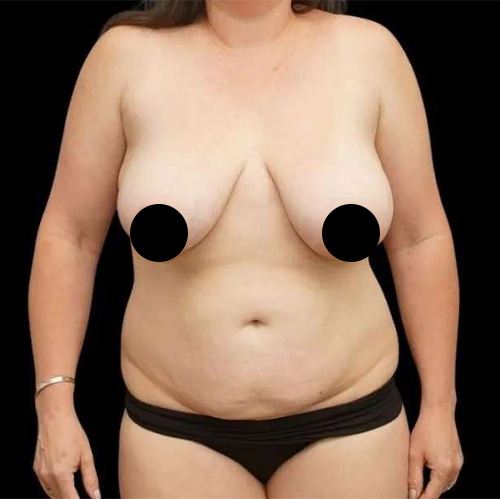
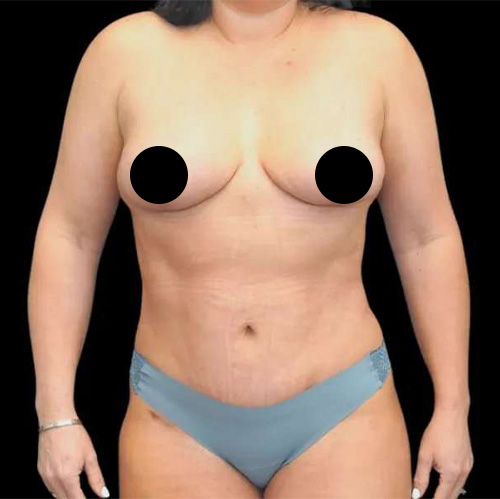
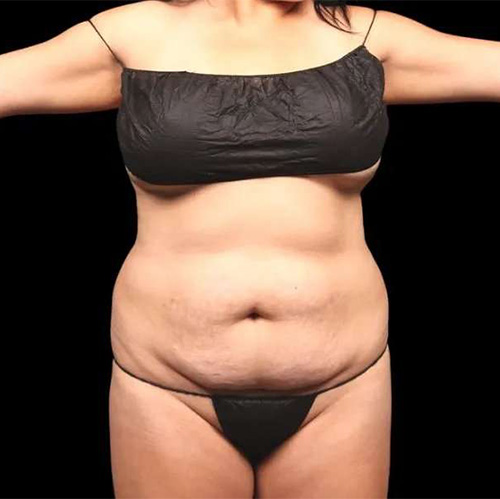
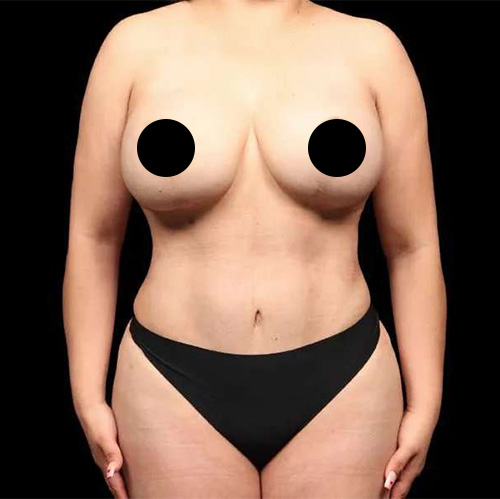
To learn more about the types of tummy tuck procedures in the Beverly Hills area, contact Lahar Plastic Surgery today. Also, be sure to take a look at our tummy tuck before and after photos.
Dr. Nicholas Lahar has extensive experience performing tummy tucks and would be happy to help you find the exact procedure for your goals.
FAQ
What’s the difference between liposuction and a tummy tuck?
Liposuction removes fat but doesn’t address loose skin or muscles; a tummy tuck excises skin, tightens muscles, and contours for dramatic reshaping when skin laxity is the main issue.
When will I see results after a tummy tuck?
It may be up to six months or a year before you are able to see the final results from your tummy tuck. Residual swelling can take a long time to completely dissipate.
How long does a tummy tuck take to heal?
Most tummy tuck incisions will be fully healed within six weeks’ time. You should also be able to return to moderate exercise and other regular activities around this time. You may need to continue wearing your compression garment even after the six-week mark, however. Speak with your surgeon to know for sure.
References
- American Society of Plastic Surgeons (ASPS). Which Tummy Tuck Is Right for Me?
- American Society of Plastic Surgeons (ASPS). Different Tummy Tuck Techniques.
- Farkas JP, et al. Complications and Risks Associated With the Different Types of Abdominoplasties: An Analysis of 55,956 Patients.PMC/PubMed. 2024.
- Repta R, et al. The Fleur-De-Lis Abdominoplasty. 2014.
- Regan JP, Casaubon JT. StatPearls/PubMed. 2017.