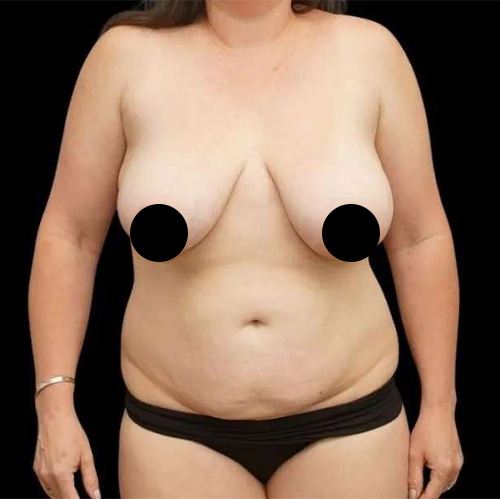
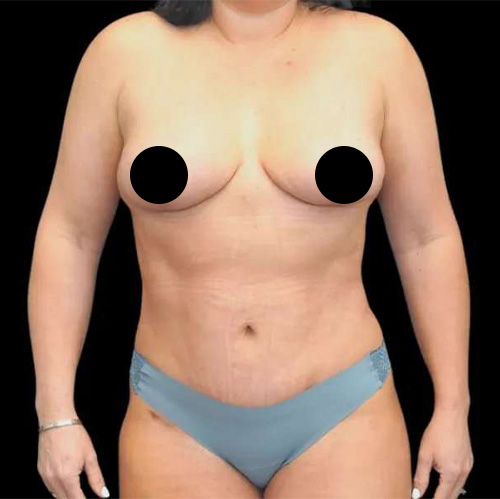
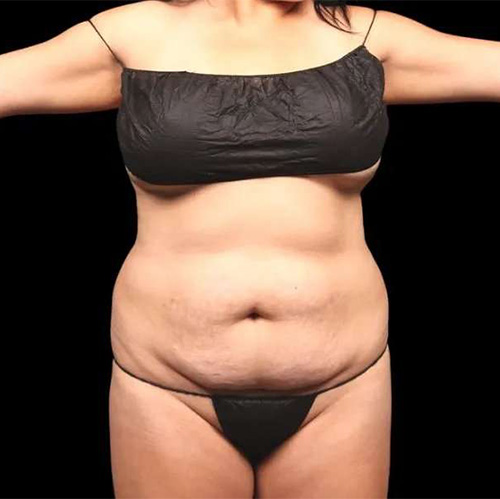
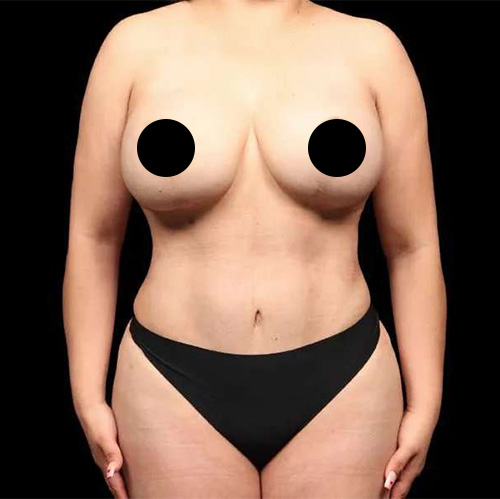
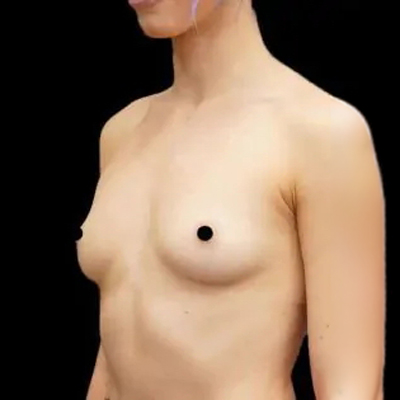
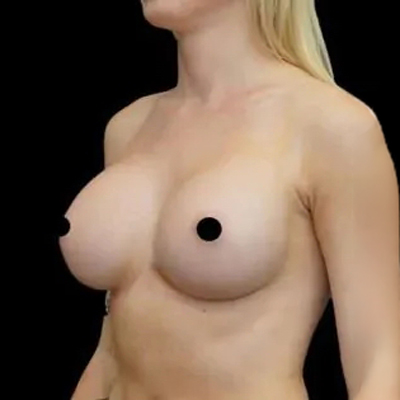
Patients who are interested in augmenting (increasing) the size of their breasts often hear about the fat transfer breast augmentation process and are intrigued.
This procedure, which takes fat cells from the stomach, arms, flanks, or legs, and relocates them into the breasts to boost the size of the breasts, can achieve totally natural looking results without requiring implants. It’s a win-win on all fronts. Just take a look at some before and after fat transfer breast augmentation photos.
In addition to bigger, more attractive breasts, patients even get the added benefit of liposuction elsewhere — typically in “trouble spots” like the stomach.
Still, one question often lingers in patients’ minds: “Will I have fat transfer breast augmentation scars?”
Before we provide an answer to this pressing question in more detail, let’s first go over the fat transfer process as this will automatically shed some light on whether or not you’ll have scars.
Contents
- 1 What is a Fat Transfer Breast Augmentation?
- 2 Does a fat transfer leave scars?
- 3 How long do Fat Transfer Breast Augmentation take to heal?
- 4 Can I minimize Fat Transfer Breast Augmentation scars?
- 5 FAQ
- 5.1 Is breast augmentation with fat transfer worth it?
- 5.2 How long does fat transfer last in the breasts?
- 5.3 What are the cons of fat transfer breast augmentation?
- 5.4 What does a breast fat transfer after 5 years look like?
- 5.5 Breast fat transfer vs implants: What’s the difference?
- 5.6 What are the fat transfer breast augmentation risks?
- 6 Set up Your Consultation Appointment
- 7 References
What is a Fat Transfer Breast Augmentation?
Fat transfer breast augmentation — also known as autologous breast augmentation or fat grafting to the breast — is a cosmetic surgery technique that uses the patient’s own fat to enlarge the breasts.
Your plastic surgeon will use liposuction to remove fat cells from places like the flanks, stomach, upper back, arms, etc. They will then process the fat to purify it. Finally, the purified fat will be injected into the desired area of the breast.
Every patient is unique, so one woman’s fat transfer process will look different than another woman’s.
For example, one patient may have uneven breasts, so they’ll want to enlarge the smaller breast to make it look more like the other breast. Other patients simply want to enlarge both of their breasts unilaterally because they have naturally small breasts. A systematic review of autologous fat grafting breast augmentation published in PubMed found that average volume retention across clinical studies ranges from 44% to 83%, with an overall average of approximately 58%. Patient satisfaction after one year of follow-up averaged 92%, confirming consistently high outcomes for appropriately selected patients.
Autologous breast augmentation can increase the size of your breasts by one-half cup to one full cup size. Any desired increase beyond this will require implants.
Does a fat transfer leave scars?
Yes, but they are typically very small.
The first thing to understand when it comes to whether or not you’ll have scars with fat grafting to the breast is that any procedure that involves making an incision will result in scars. There is no way to make an incision and not have at least a small scar.
The good thing about the fat transfer process is that the incisions necessary for the procedure are very small. With a tummy tuck, for example, the lateral incision across the lower abdomen tends to be at least three inches long — and sometimes, more like six. So, with that surgery, you’re going to have a more noticeable scar.
However, with the fat transfer procedure, the only incisions that need to be made are for liposuction and the injection process. The injection process uses needles, so those wounds are going to be almost invisible.
The liposuction portion of the procedure may have slightly larger scars because each incision must be able to fit a cannula (a thin metal tube). Still, “larger” only means about one-eighth to one-half of an inch per incision. Naturally, this means that even your liposuction scars will be barely noticeable.
As an added note, there are ways to minimize the appearance of any scarring you do have as well. We will discuss more about this later on below.
Ultimately, when you consider the benefits you’re getting with a breast augmentation fat transfer, the trade-off is usually acceptable for most patients.
A clinical review of fat grafting breast augmentation techniques published in PMC/PubMed confirms that the minimally invasive nature of autologous fat grafting produces significantly less visible scarring than traditional implant-based breast augmentation. No large pocket incisions are required, and scar sites are confined to small liposuction entry points.
Scarring is one of the main reasons patients come to us, specifically asking about fat transfer over implants. The incisions are so small that most patients can’t find them a few months after surgery. In our practice, this is one of the most satisfying aspects of the procedure to explain in consultation.
– Dr. Lahar
It’s also worth noting that the highly successful fat transfer process is used in several mainstream plastic surgeries. For example, this is the technique that Brazilian butt lifts (BBLs) use, except that with BBLs, the fat is injected into the hips and butt area instead of into the breasts.
How long do Fat Transfer Breast Augmentation take to heal?
The healing stage of fat grafting varies from patient to patient. Most patients will be fully healed after two to four weeks. This is when bruising, swelling, soreness, and other symptoms will have dissipated. However, it may take up to six months after your surgery for you to see the full extent of your results.
Cleveland Clinic notes that fat transfer breast augmentation typically involves a shorter recovery than implant-based surgery. Patients should expect some swelling and tenderness in both the donor and recipient areas for several weeks following the procedure.
Can I minimize Fat Transfer Breast Augmentation scars?
Yes. Whether or not you have scars long-term after this procedure depends on several factors. Some are within your control, and some are not in your control. For example, certain people have a genetic propensity to have poor scarring after surgery. Your skin type, age, and genetic predispositions will impact your scarring greatly.
On the other hand, there are three things that are within your control that you can do to improve the appearance of your scars long-term as well:
Don’t push yourself too hard during recovery.
Do not exercise, lift anything heavy, put pressure on your incision sites, or stretch or strain in awkward ways during your recovery. All of these things may negatively impact your scars.
Stay out of the sun.
Ultraviolet rays from the sun (UV rays) can make your scars darker in color and more raised. Staying out of the sun and using protective clothing and sunscreen will minimize the appearance of your scars long-term.
Utilize scar therapy techniques as soon as possible.
Always speak to your surgeon first, but do inquire about scar therapy techniques, which can be used near the end of your recovery to limit scar appearance. Silicone-based products are some of the best options.
A clinical evidence review published in PubMed found that silicone gel sheeting and silicone gel products are the most widely supported non-invasive scar management options available. The strongest evidence base for reducing scar thickness, redness, and overall appearance following surgery.
We start talking about scar management at the post-op visit, not after patients start worrying about it months later. Getting on a silicone protocol early is one of the simplest and most effective things patients can do to influence their final scar appearance.
– Dr. Lahar
FAQ
Is breast augmentation with fat transfer worth it?
Yes, according to the majority of breast fat transfer reviews, patients are extremely happy with the results they achieve with this procedure.
How long does fat transfer last in the breasts?
You can think of the newly transferred fat that now lives in your breasts as permanent fat. It will act just like all of the other fat cells in your body and will last indefinitely.
What are the cons of fat transfer breast augmentation?
There are a few drawbacks to the fat transfer breast augmentation process. Likely, the most notable con is that you can only go up about one-half to one full cup size with this technique.
What does a breast fat transfer after 5 years look like?
Most patients who undergo breast fat transfer procedures will maintain their results after five years. Your results are more likely to last if you maintain a steady body weight and lead a healthy lifestyle.
Breast fat transfer vs implants: What’s the difference?
Breast augmentation fat transfer involves relocating fat. With liposuction, fat cells are removed from unwanted places and injected into the breasts.
Breast implants are prosthetic implant devices that are inserted into each breast pocket to increase the breast size overall.
What are the fat transfer breast augmentation risks?
All of the normal surgery-related potential complications that are risks with other surgeries are also risks with the fat transfer breast augmentation process. However, these risks (excessive bleeding, infection, etc.) are rare.
In addition, fat transfer techniques may be unsuccessful if the fat does not survive in the desired location because of either the death of fat cells (fat necrosis) or the absorption of the fat into your body (fat reabsorption). These problems are also rare.
Set up Your Consultation Appointment
Could you benefit from a fat transfer breast augmentation?
This procedure can provide a flattering increase in the size of your breasts while also reducing your waistline or helping you lose fat on other parts of your body. Of course, it should go without saying that your results can completely change your silhouette and give you a boost in confidence as well.
To learn more about this procedure and find out if you’re a candidate, contact Lahar Plastic Surgery today and schedule your appointment with Dr. Nicholas Lahar. We look forward to hearing from you!
References
- Cleveland Clinic. Fat Transfer Breast Augmentation.
- Krastev TK, et al. Autologous Fat Grafting in Breast Augmentation: A Systematic Review. PubMed. 2023.
- Rauso R, et al. The Safety of Fat Grafting: An Institutional Retrospective Review. PMC/PubMed. 2023.
- Mustoe TA, et al. International Advisory Panel on Scar Management: Evidence-Based Scar Management. PubMed. 2002.